U.S. quarters from the 20th century cover one of the most dynamic periods in American coinage. Within a single denomination, collectors encounter three major design eras, multiple silver standards, and clear shifts in minting quality and output. This makes the quarter an ideal teaching tool and a practical collecting target.
Unlike gold issues or early copper, many 20th-century quarters remain financially accessible. Circulated bicentennial quarter examples often sit close to silver melt value, while better dates and first-year issues introduce controlled scarcity without pushing budgets into four figures.
What Makes 20th-Century Quarters Collectible
The appeal rests on structure rather than hype. These coins offer:
- Distinct design transitions tied to national identity
- 90% silver content across most of the century
- Well-documented mintages, allowing informed selection
- Clear upgrade paths, from worn to choice circulated
Collectors can build meaningful sets with historical range using VF-grade coins rather than chasing top-population pieces.
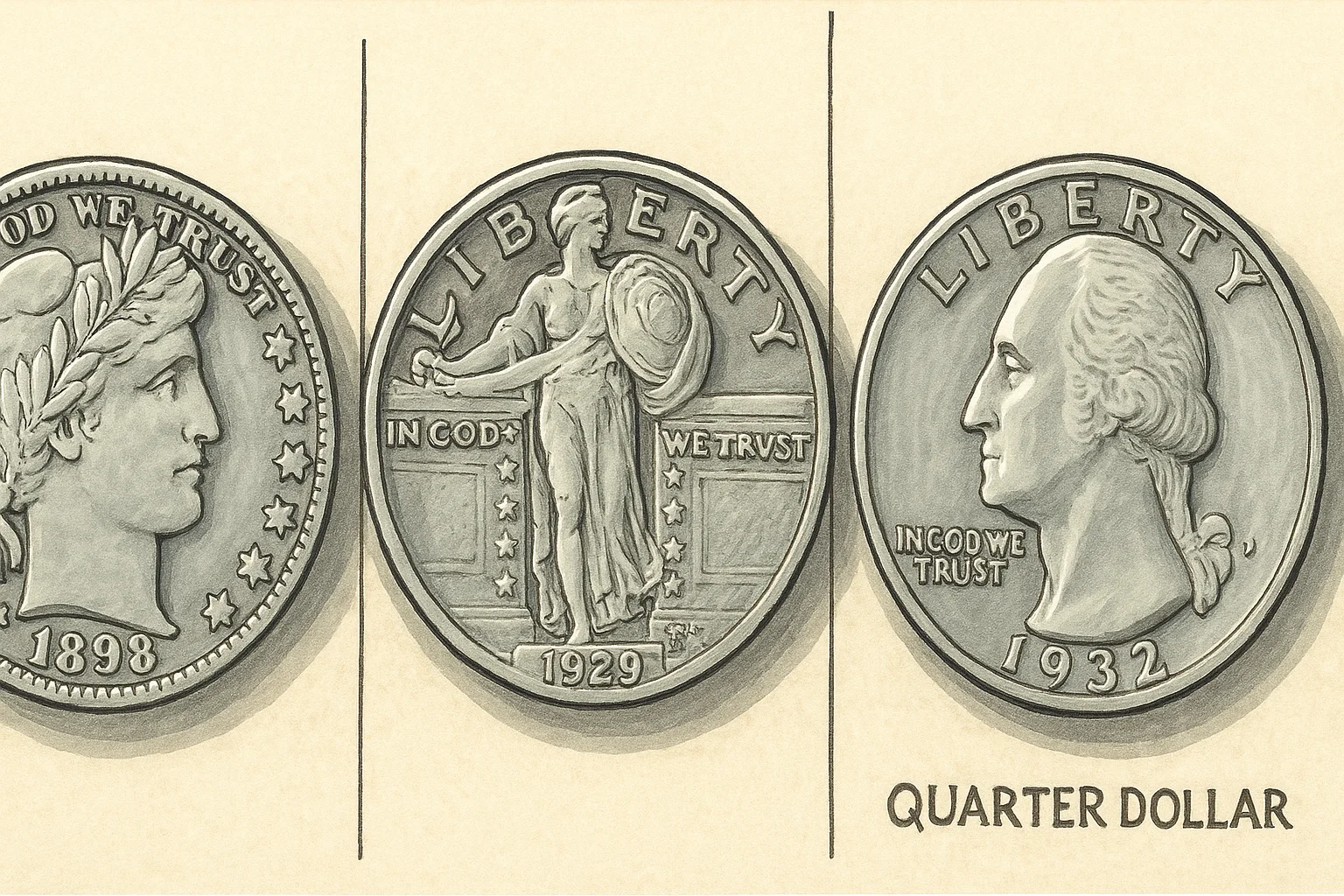
Barber Quarters (1892–1916): The Starting Line
Although the Barber quarter technically begins in the late 19th century, it anchors any serious 20th-century set. Charles E. Barber’s Liberty head design represents the end of classical coinage aesthetics before reform took hold.
Key points for collectors:
- Struck in 90% silver
- Consistent design across all denominations
- Strong demand for semi-keys, but many common dates remain affordable
While famous keys like the 1901-S sit far beyond beginner budgets, common dates such as 1910-D or 1910-S often trade between $10 and $30 in VF, offering authentic pre-WWI silver with solid eye appeal.
Why Common Dates Still Matter
In Barber quarters, wear patterns teach grading discipline when used together with the best coin value app. Weak rims, flat hair detail, and fading legends help collectors understand circulation history. These coins also provide a visual bridge to later designs that emphasized bolder relief and cleaner strikes.
Snapshot: Early 20th-Century Entry Points
| Coin | Why It Belongs | Typical VF Price |
| 1910-D Barber | Design benchmark | $10–30 |
| 1910-S Barber | Mint variety | $15–35 |
This foundation sets the stage for one of the most visually striking quarter designs ever produced—the Standing Liberty series, where artistry and strike quality begin to shape collector priorities.
Standing Liberty and Washington Quarters: Art, Change, and Stability
The middle decades of the 20th century brought two defining quarter designs. Each reflects a different philosophy. One emphasized artistry and symbolism. The other focused on clarity, durability, and mass production. Together, they form the core of most 20th-century quarter collections.
Standing Liberty Quarters (1916–1930): Design with Challenges
The Standing Liberty quarter introduced a bold, modern look. Liberty stands facing forward, shield raised, olive branch in hand. The design captured a nation shifting its identity on the world stage.
Collectors quickly learn that strike quality defines this series.
Notable collecting points:
- Type 1 (1916–1917): Exposed chest, short run, scarce
- Type 2 (1917–1930): Modified with chainmail for durability
- Dates and stars often weak due to shallow relief — don’t hesitate to use coin identification app to stay sure about each particular type
The famous 1916 Type 1 sits well beyond casual budgets. The opportunity lies in later dates.
The 1923-S Standing Liberty quarter stands out. With modest mintage and decent availability, it offers:
- Clear date visibility in VF
- Possibility of near full head detail
- Prices around $20–50 in VF
This coin teaches how strike and preservation affect value without demanding heavy investment.
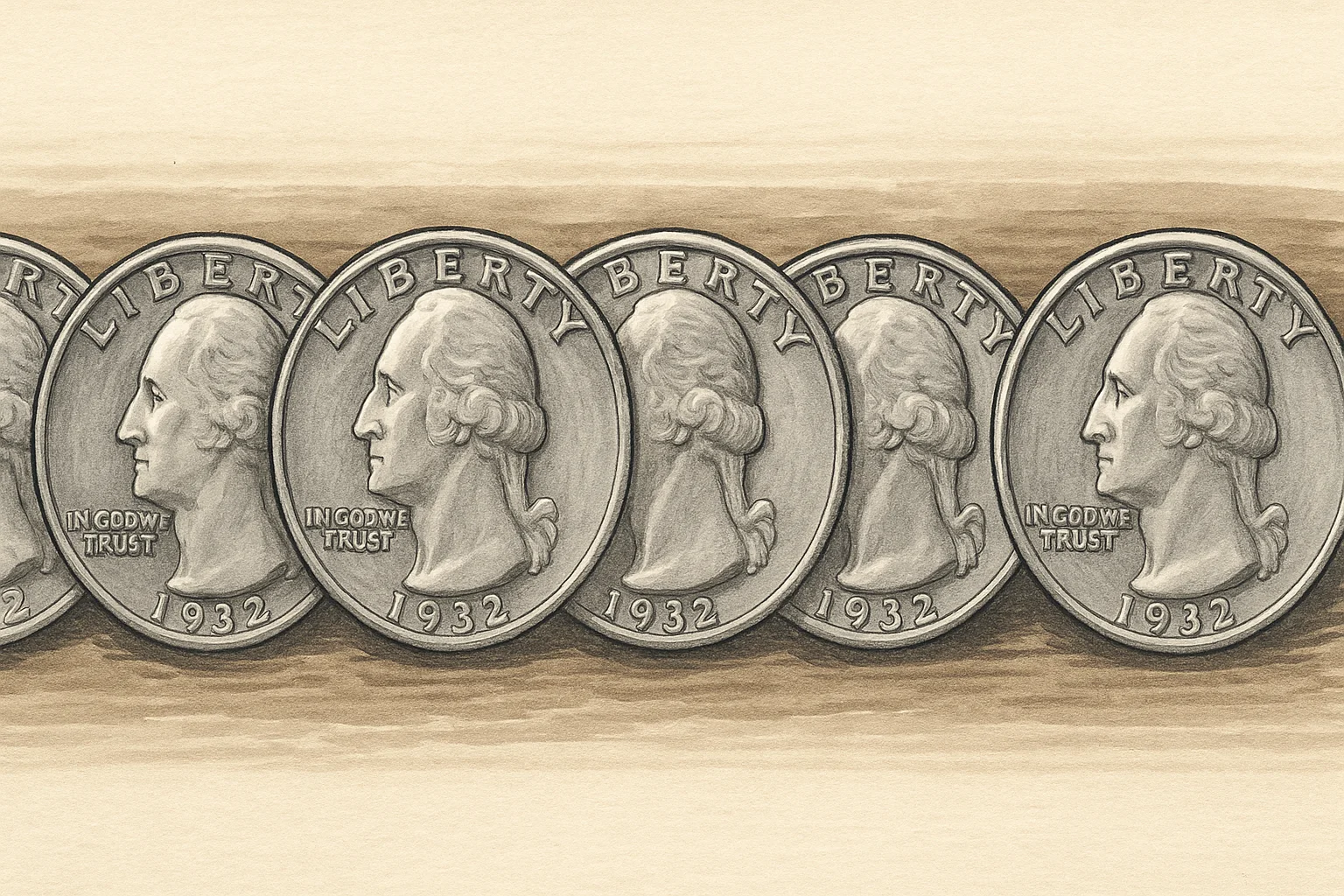
Washington Quarters (1932–1964): Practical Silver Icons
The Washington quarter marked a shift toward practicality. Introduced in 1932 to honor Washington’s bicentennial, the design proved so successful that it remained unchanged for decades.
For collectors, the series provides structure:
- 1932-D and 1932-S serve as natural key dates
- Later issues deliver consistency and silver stability
- The final year, 1964, marks the end of 90% silver circulation
While early keys command premiums, circulated 1932-D and 1932-S examples often appear between $100 and $200 in Fine, making them achievable milestones.
At the opposite end, the 1964 Washington quarter offers:
- High mintage
- Strong liquidity
- Entry prices near $5–12
This coin anchors any 20th-century set as the final silver issue before the clad era.
Core Mid-Century Picks
| Quarter | Era Significance | Typical VF Price |
| 1923-S Standing Liberty | Strike-quality lesson | $20–50 |
| 1932-D Washington | First-year key | $100–200 |
| 1964 Washington | Final silver | $5–12 |
These coins balance artistry, history, and affordability. They also prepare collectors for modern extensions that carry 20th-century themes into contemporary collecting.
Modern Extensions and Smart Ways to Build the Set
The final decades of the 20th century introduced quarters that changed how people collect. While silver disappeared from circulation after 1964, historical themes and variety collecting filled the gap. These modern extensions connect classic silver issues with contemporary interest.
Bicentennial Quarters (1776–1976): Symbol Over Scarcity
The Bicentennial quarter stands as the most recognizable modern design. Its drummer boy reverse and dual date marked America’s 200th anniversary.
Most examples remain common. Value appears in context:
- Type 2 reverse varieties
- Clean Mint State examples
- Error coins such as doubled dies or off-center strikes
Circulated pieces often trade between $1 and $5, making them ideal placeholders in a 20th-century set.
State Quarters (1999): The Modern Bridge
The 1999 Delaware State quarter closed the century with a collecting revival. While standard issues are plentiful, certain varieties draw attention.
The Delaware doubled die reverse, sometimes called the “Spitting Horse,” remains popular:
- Easy to explain and recognize
- Historically tied to the program launch
- Typical prices around $15–25
This coin represents the transition from traditional date-and-mint collecting to variety-focused modern hunting.
Building a Balanced 20th-Century Quarter Set
Successful collections grow through planning rather than chasing extremes.
Recommended approach:
- Start with VF silver types for each design era
- Add one key or semi-key per series
- Include one modern variety for contrast
This structure keeps costs controlled while maintaining historical depth.
Organizing and Verifying Finds
Estate lots, dealer trays, and mixed groups remain productive sources. Some collectors use tools like the Coin ID Scanner app to confirm year, composition, weight, and basic specifications while sorting large numbers of quarters. Digital tracking helps identify gaps and avoid duplicates when building across decades.
20th-century quarters reward collectors who value continuity. From Barber silver through Standing Liberty artistry to Washington stability and modern program launches, the series offers a complete narrative at manageable cost.
A carefully chosen group of quarters can represent an entire century of U.S. coinage without sacrificing quality or clarity.