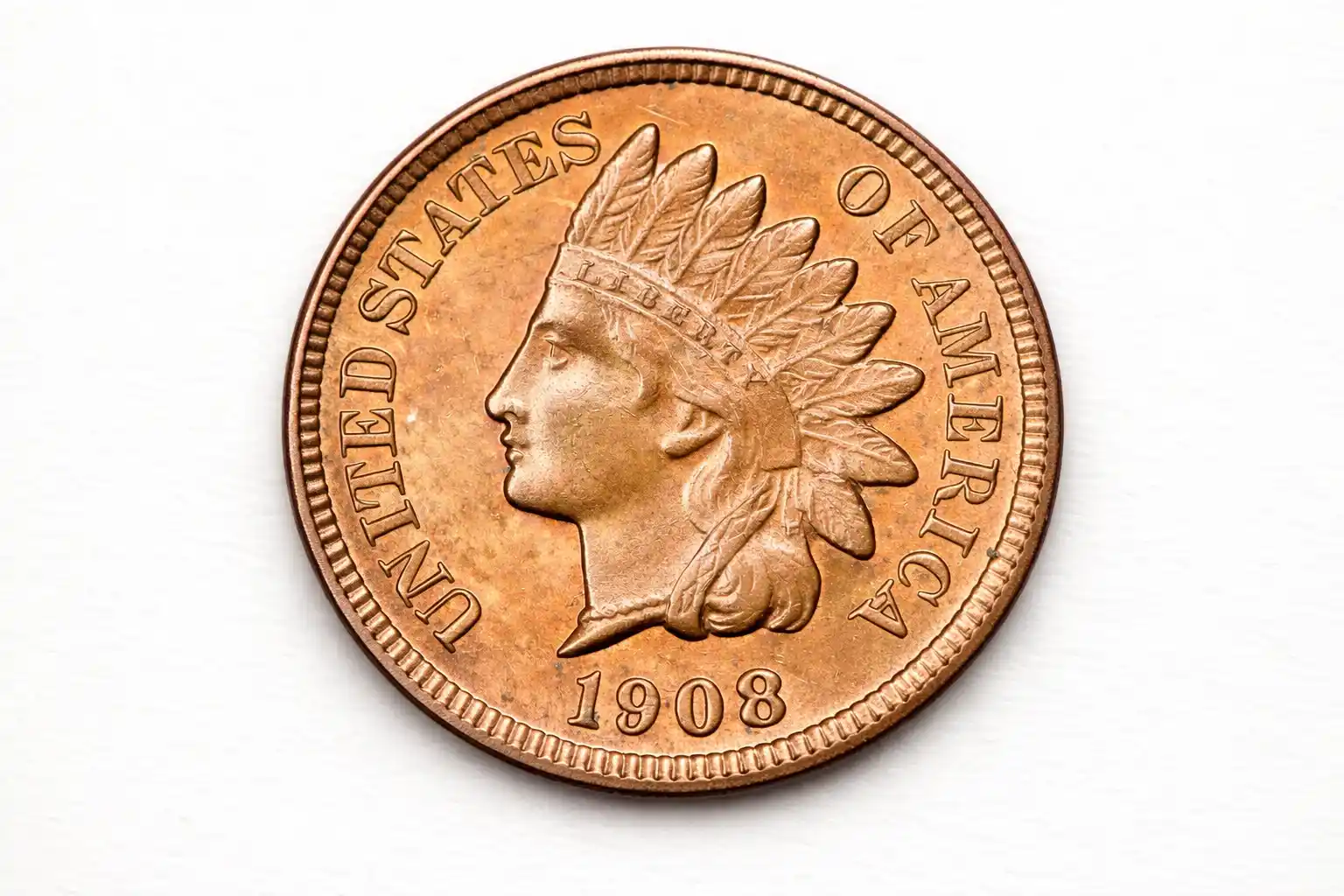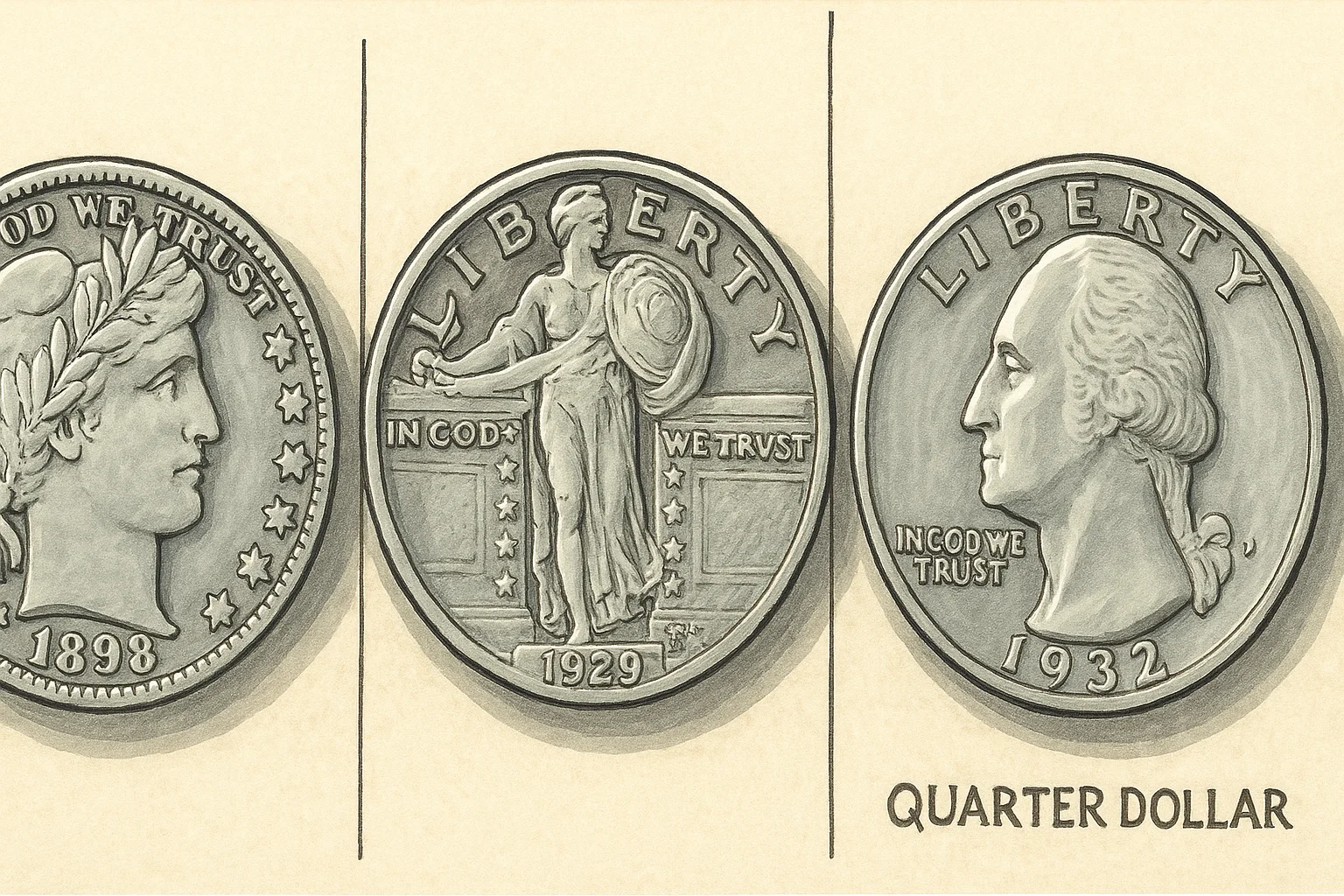
The Sheldon Scale uses numbers from 1 to 70, with number 1 showing the worst condition and number 70 showing the perfect, ideal condition, giving an approximate coin value.

Main Grading Groups
The scale is divided into three main categories, helping to separate coins based on their use:
Circulated coins were in daily use, showing clear signs of wear, rub marks, and damage, receiving grades from P-1 up to AU-58.
Uncirculated coins never went into monetary use, having wear only from the production, transport, or storage processes in bags, receiving grades from MS-60 to MS-70.
Proof coins are specially made for collectors using a special method, featuring shiny fields and a dull relief, receiving grades from PR-60 to PR-70.
Circulated Coin Grades (P-1 to AU-58)
In this range, the focus is mainly on the amount of wear on the coin’s raised design and flat areas, with wear leading to the loss of the coin’s original metallic shine and the smoothing of small details.
Low Grades (P, Fr, G)
These low grades are given to coins with very heavy wear, meaning most of the original design is rubbed off.
- P-1: This is the lowest grade, meaning the coin has extremely heavy wear, showing only the most general outlines of the coin’s shape, making it hard to identify the coin type and sometimes even the year, with most letters, numbers, and the portrait being completely unreadable or almost rubbed away.
- Fr-2: The condition is only slightly better than P-1, allowing one to clearly identify the year and mint mark, though most of the design is still worn away, showing only flat shapes of the major design elements.
- G-4: The coin is heavily worn, but its main letters and numbers, including the year, value, and legend, are readable, though not fully clear, while the raised design is flat, meaning small details are completely rubbed off. The fields of the coin are also badly damaged and scratched.
- G-6: This coin is slightly better than G-4, featuring better readability of the letters, but the design remains flat.
Middle Grades (VG, F)
In the coin scanner app this range shows moderate wear, meaning some of the small details are rubbed off, but the outlines of the design elements are clear.
- VG-8: This coin keeps only the main lines of the design, with about 25-35% of the small details still rubbed off, having clear outlines of the letters and numbers, but still showing very clear wear on the highest parts of the relief.
- VG-10: This coin is slightly better than VG-8, showing very faint traces of original small details on some large design elements, which were not present in VG-8.
- F-12: The coin shows moderate wear, meaning about 50% of the small details are rubbed off, showing clear contours of the relief and letters, with wear being noticeable on the highest points, but keeping more details in the lower areas.
- F-15: This is close to F-20, but with stronger signs of wear on the very highest points.
High Circulated Grades (VF, XF/EF)
These coins show only light wear, keeping most of the small details, but with clear rub marks on the highest areas.
- VF-20: This coin keeps about 75% of the small details intended by the original design, showing wear only on the very highest points of the relief, being the first parts to touch other coins and surfaces. The coin’s surface may look a bit dull because the original shine is gone.
- VF-30: This coin has a higher level of preservation, with wear being present, but spread less and being less strong than in VF-20, starting to show small lines in the hair of a portrait or on clothing.
- VF-35: The coin looks very good, with signs of wear located in a minimal area, mostly on the top of the relief.
- XF-40: This coin has light wear only on a few of the very highest points of the relief, keeping about 90% of all small details, having fields clean of strong scratches, although they may be a little dull.
- XF-45: Wear is minimal, showing only an easily missed rub mark on the very highest places, being visible only with a magnifying glass, making the coin look almost new.
Almost Uncirculated (AU)
These coins were used for a very short time or had only light contact, having the main sign of minimal rub marks and keeping some of the original metallic shine.
- AU-50: The coin shows rub marks on 50% or more of the raised areas, but must keep some original shine in the protected parts of the coin, such as the recessed areas of the design.
- AU-55: Wear is minimal, with rub marks visible only on the very highest points, requiring about 75% of the original shine to be kept, making the coin very close to the MS condition, but still clearly showing short use or contact.
- AU-58: This is the highest grade for a coin that was in use, actually being a coin with full original shine, showing only one or two easily missed, very small rub marks on one or two high points of the relief, often being called a “Slider” because it is almost the same as low MS grades.
Uncirculated Grades (MS-60 to MS-70)
The “Mint State” grades are used only for coins that were never in monetary use, meaning the grading in this range depends not on wear but on the quality of production, the presence of production or transport defects, and how much of the original shine is kept.
All MS-60 and higher coins keep 100% of the original design details, guaranteeing no wear from use.

MS Grading Criteria
Luster and color are about the amount and evenness of the original metallic shine, with a brighter and more even shine giving a higher possible grade.
Surface Damage includes the number and size of small marks from hits, appearing when coins were moved in bags, with fewer and less noticeable marks giving a higher grade.
Quality of strike means the clarity and fullness of the stamped design details, requiring the coin to be struck strongly and evenly so that all small details from the design are clear.
The MS Grade Range
- MS-60: This coin wasn’t used, but has many visible defects, showing large or many noticeable bag marks, clear scratches, and low strike quality. The luster may be dull or broken, this being the lowest grade guaranteeing no wear from use.
- MS-61: This coin is slightly better than MS-60, having fewer of the biggest defects, but still showing many bag marks, being easy to see without a magnifying glass, with the shine possibly being uneven.
- MS-62: This is an average uncirculated coin, showing noticeable but not too many bag marks, which may be located in one area or spread across the whole surface, having a luster that is present but may be uneven.
- MS-63: This coin has an average level of preservation, showing a few noticeable bag marks or light scratches, having an even but not perfect luster, giving a good general impression, but with defects being easy to find.
- MS-64: This is a very good coin, showing only a few small bag marks or light, barely visible scratches, with defects not taking attention away from the coin’s overall look, having a strong and even luster.
- MS-65: The “Gem” standard is very important for collectors, since MS-65 and higher coins are worth much more, allowing the coin to have only a few very small, almost invisible defects, which aren’t located in the center of the relief, having a full, strong, and bright luster.
- MS-66: This coin is in excellent condition, having a superb strike and a bright, full luster, with defects being almost absent; if they are present, they are extremely small and hard to find.
- MS-67: This coin is in exceptional condition, being almost perfect, with the strike being full and the luster being flawless, meaning any production marks can only be found with a strong magnifying glass, and they aren’t in places that attract attention.
- MS-68: This coin is very close to perfect, having an almost flawless surface, strong and even luster, with defects being absent.
- MS-69: This coin has a perfect strike and surface, without any defects visible with the naked eye, meaning all criteria are very close to perfection.
- MS-70: The coin is considered ideal, having 100% luster, a perfect strike, and an absolutely flawless surface, with the total absence of any defects, even when using a magnifying glass, making MS-70 coins the most expensive and rare.
A coin’s price grows very quickly as its grade goes up, for example, the cost difference between an AU-58 coin and an MS-63 coin can be double, and between MS-63 and MS-65 it can be ten times more.
Being able to decide for yourself if a coin is AU-58 or MS-60 protects you from buying a low-grade coin at a high-grade price — train your skills with a coin value checker, that is, try to determine the grade yourself and then check if you did it correctly in the app.
When you buy a coin from a seller, you must know what their description means, so if a seller gives the grade F-12, you know to expect a coin with 50% of the small details rubbed off, allowing you to discuss the price fairly if the coin is actually only G-4.